Cholesterol and lipid profile MCQs with answers
Practice MCQs on cholesterol, lipid profile, hyperlipidemia, hypercholesterolemia, atherosclerosis, fatty liver disease, and lipid storage disorders. Cholesterol and lipid profile MCQs with answers for GPAT and NIPER MCQs for AIIMS Pharmacist, Railway Pharmacist, SSC, ESIC, and State Pharmacist
Dr. Alok Singh
7/19/20266 min read
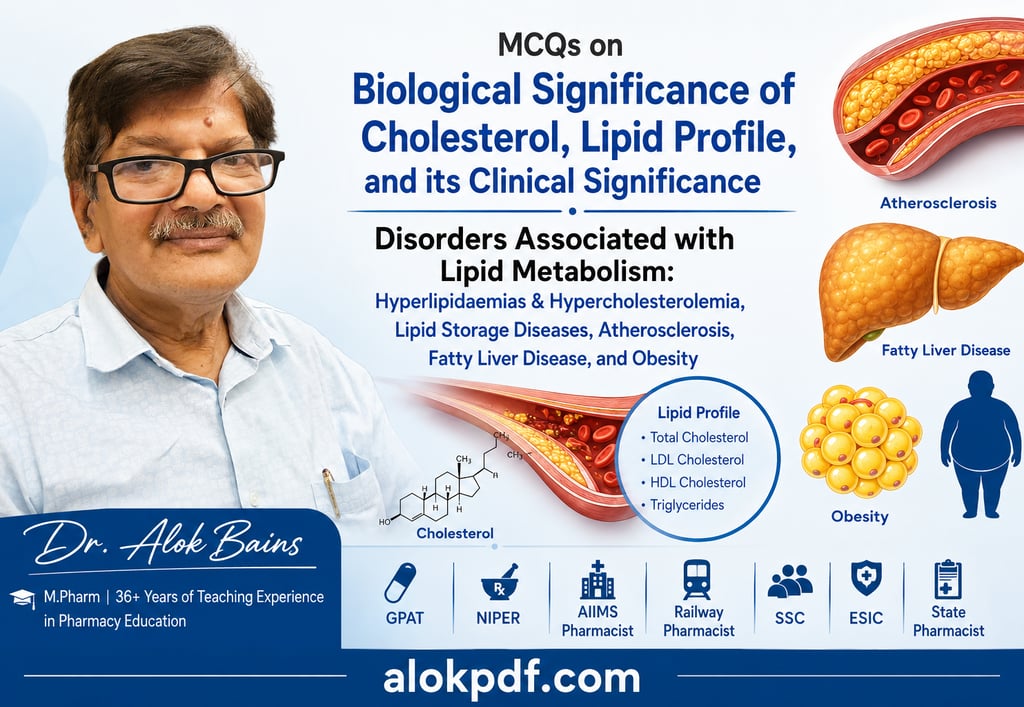
Biological Significance of Cholesterol, Lipid Profile, and Disorders of Lipid Metabolism
1. Biological Significance of Cholesterol
Cholesterol is a waxy, fat-like substance present in all animal cells.
It is synthesized mainly in the liver and is also obtained from animal-based foods.
Cholesterol is an essential component of cell membranes, helping maintain their strength and flexibility.
It is the precursor of
Steroid hormones (cortisol, aldosterone, estrogen, progesterone, testosterone)
Vitamin D
Bile acids, which aid in the digestion and absorption of fats.
Cholesterol is transported in the blood by lipoproteins because it is insoluble in water.
Excess cholesterol, especially LDL cholesterol, increases the risk of cardiovascular diseases.
Memory Tip: "Cell–Hormone–Vitamin D–Bile" → Four major functions of cholesterol.
2. Lipoproteins at a Glance
Lipoprotein Main Function Clinical Importance
Chylomicrons Transport dietary triglycerides from intestine Highest triglyceride content
VLDL Transport triglycerides from liver Increases in obesity and diabetes
LDL Delivers cholesterol to tissues "Bad cholesterol"; promotes atherosclerosis
HDL Removes cholesterol from tissues to liver "Good cholesterol"; protects the heart
Memory Tip: LDL = Leaves cholesterol to tissues.
HDL = Helps remove cholesterol.
3. Lipid Profile
A lipid profile is a blood test used to assess cardiovascular risk.
It usually measures:
Total Cholesterol (TC)
LDL Cholesterol (Bad cholesterol)
HDL Cholesterol (Good cholesterol)
Triglycerides (TG)
Sometimes VLDL and Non-HDL cholesterol
General Interpretation
High LDL: Increased risk of heart attack and stroke.
High HDL: Protective against heart disease.
High Triglycerides: Risk of pancreatitis and metabolic syndrome.
High Total Cholesterol: Indicates increased cardiovascular risk when associated with high LDL.
4. Clinical Interpretation of Lipid Profile
High LDL + Low HDL = Highest risk for coronary artery disease.
High Triglycerides (>1000 mg/dL) = Risk of acute pancreatitis.
Low HDL is an independent risk factor for cardiovascular disease.
Lipid profile should be interpreted along with age, diabetes, hypertension, obesity, and smoking status.
Memory Tip: "LDL Loads arteries, HDL Helps arteries."
5. Hyperlipidaemia
Hyperlipidaemia means abnormally high levels of lipids in the blood.
May involve increased:
Cholesterol
Triglycerides
LDL
VLDL
Causes:
Genetic disorders
Obesity
Diabetes mellitus
Hypothyroidism
High-fat diet
Physical inactivity
Complications
Coronary artery disease
Stroke
Peripheral vascular disease
Acute pancreatitis (with severe hypertriglyceridaemia)
6. Hypercholesterolemia
Refers specifically to high blood cholesterol, especially LDL cholesterol.
May be:
Primary (genetic) – Familial hypercholesterolemia
Secondary – Diabetes, hypothyroidism, kidney disease, obesity
Clinical Features
Increased risk of premature heart disease.
Tendon xanthomas may occur in familial cases.
7. Lipid Storage Diseases (Lysosomal Storage Disorders)
These are inherited disorders caused by enzyme deficiencies, leading to the accumulation of lipids inside cells.
Important Diseases
Gaucher Disease
Enzyme deficiency: Glucocerebrosidase
Lipid accumulated: Glucocerebroside
Niemann-Pick Disease
Enzyme deficiency: Sphingomyelinase
Lipid accumulated: Sphingomyelin
Tay-Sachs Disease
Enzyme deficiency: Hexosaminidase A
Lipid accumulated: GM2 ganglioside
Memory Tip:
Gaucher: Gluco
Niemann: Sphingo
Tay-Sachs: Ganglioside
8. Atherosclerosis
Atherosclerosis is the hardening and narrowing of arteries due to the formation of cholesterol-rich plaques.
Begins with damage to the arterial wall, followed by deposition of oxidized LDL.
Macrophages engulf oxidized LDL and become foam cells, forming fatty streaks.
Risk Factors
High LDL
Low HDL
Smoking
Diabetes
Hypertension
Obesity
Sedentary lifestyle
Complications
Coronary artery disease
Heart attack
Stroke
Peripheral arterial disease
9. Fatty Liver Disease (NAFLD)
Fat accumulates inside liver cells without significant alcohol intake.
Commonly associated with:
Obesity
Diabetes
Metabolic syndrome
High triglycerides
If untreated
Fatty liver → Inflammation (NASH) → Fibrosis → Cirrhosis.
10. Obesity
Obesity is the excessive accumulation of body fat due to energy intake exceeding energy expenditure.
It is measured using Body Mass Index (BMI).
Health Risks
Type 2 diabetes
Hypertension
Dyslipidaemia
Fatty liver disease
Heart disease
Stroke
Osteoarthritis
Prevention
Balanced diet
Regular exercise
Weight control
Reduced intake of saturated fats and sugary foods
Exam Pearls (Highly Important)
LDL = Bad cholesterol (atherogenic).
HDL = Good cholesterol (protective).
Chylomicrons carry dietary triglycerides.
VLDL carries endogenous triglycerides.
Cholesterol is the precursor of steroid hormones, bile acids, and vitamin D.
Foam cells are formed by macrophages ingesting oxidized LDL.
Familial hypercholesterolemia is caused by defective LDL receptors.
Triglycerides >1000 mg/dL increase the risk of acute pancreatitis.
NAFLD is strongly associated with obesity and insulin resistance.
Atherosclerosis is the leading cause of heart attack and stroke.
One-Minute Revision
HDL = Good; LDL = Bad
VLDL → Liver to tissues
Chylomicrons → Intestine to tissues
High LDL → Atherosclerosis
High TG → Pancreatitis
Obesity → Diabetes + Dyslipidaemia + Fatty Liver
Foam cells = Oxidized LDL + Macrophages
Cholesterol → Cell membrane + Steroid hormones + Vitamin D + Bile acids
MCQs on Cholesterol, Lipid Profile, and Disorders of Lipid Metabolism.
(GPAT | NIPER | AIIMS Pharmacist | Railway Pharmacist | SSC | ESIC | State Pharmacist Exams)
1. Which of the following best explains why cholesterol is considered biologically essential despite its association with cardiovascular disease?
A. It is the primary source of ATP in cardiac muscle.
B. It serves as a precursor for steroid hormones, bile acids, and vitamin D.
C. It is the major storage form of energy in adipose tissue.
D. It is synthesized only from dietary fats.
Answer: B
Explanation: Cholesterol is an essential precursor for steroid hormones, bile acids, and vitamin D and is a structural component of cell membranes. ATP production is mainly from glucose and fatty acids, triglycerides store energy, and cholesterol is synthesized endogenously, mainly in the liver.
2. A patient has elevated LDL-C, normal HDL-C, and normal triglycerides. Which lipid abnormality is most specifically associated with increased risk of coronary artery disease?
A. Elevated HDL
B. Elevated LDL
C. Decreased Chylomicrons
D. Elevated Phospholipids
Answer: B
Explanation: LDL transports cholesterol to peripheral tissues and promotes atherosclerotic plaque formation. HDL is protective, while phospholipids and chylomicrons are not the primary determinants of coronary risk.
3. Which lipoprotein is primarily responsible for reverse cholesterol transport?
A. LDL
B. HDL
C. VLDL
D. Chylomicrons
Answer: B
Explanation: HDL removes excess cholesterol from peripheral tissues and transports it to the liver for excretion. LDL, VLDL, and chylomicrons mainly deliver lipids from the liver or intestine to tissues.
4. Which lipid profile pattern is most characteristic of familial hypercholesterolemia?
A. Elevated LDL with normal triglycerides
B. Elevated HDL with low LDL
C. Elevated Chylomicrons only
D. Low LDL with elevated HDL
Answer: A
Explanation: Familial hypercholesterolemia results from defective LDL receptors causing marked LDL elevation while triglycerides often remain normal. The other lipid patterns are not characteristic of this disorder.
5. The most atherogenic lipoprotein among the following is:
A. HDL
B. LDL
C. Chylomicrons
D. Albumin
Answer: B
Explanation: LDL readily penetrates the arterial wall, undergoes oxidation, and initiates plaque formation. HDL is anti-atherogenic, while albumin is not a lipoprotein.
6. Which laboratory parameter is considered a negative cardiovascular risk factor?
A. High LDL-C
B. High Total Cholesterol
C. High HDL-C
D. High VLDL
Answer: C
Explanation: Higher HDL levels reduce cardiovascular risk by promoting reverse cholesterol transport. Elevated LDL, VLDL, and total cholesterol increase cardiovascular risk.
7. In uncontrolled diabetes mellitus, hypertriglyceridemia develops primarily because:
A. Increased LDL receptor activity
B. Reduced activity of lipoprotein lipase
C. Increased HDL synthesis
D. Increased bile acid formation
Answer: B
Explanation: Insulin deficiency decreases lipoprotein lipase activity, impairing triglyceride clearance and increasing VLDL levels. The remaining options do not explain diabetic hypertriglyceridemia.
8. Which apolipoprotein is essential for activation of lipoprotein lipase?
A. Apo A-I
B. Apo B-100
C. Apo C-II
D. Apo E
Answer: C
Explanation: Apo C-II activates lipoprotein lipase, enabling hydrolysis of triglycerides in chylomicrons and VLDL. Apo A-I activates LCAT, Apo B-100 binds LDL receptors, and Apo E mediates remnant uptake.
9. Which of the following contributes most directly to foam cell formation in atherosclerosis?
A. Native LDL uptake by hepatocytes
B. Oxidized LDL uptake by macrophages
C. HDL uptake by endothelial cells
D. Chylomicron uptake by adipocytes
Answer: B
Explanation: Macrophages engulf oxidized LDL through scavenger receptors, forming foam cells—the hallmark of early atherosclerotic lesions. Native LDL uptake is regulated and does not produce foam cells.
10. Which lipid profile finding would indicate the greatest risk of acute pancreatitis?
A. LDL = 180 mg/dL
B. HDL = 70 mg/dL
C. Triglycerides = 1200 mg/dL
D. Total cholesterol = 240 mg/dL
Answer: C
Explanation: Severe hypertriglyceridemia (>1000 mg/dL) significantly increases the risk of acute pancreatitis. Elevated LDL mainly increases cardiovascular risk.
11. A patient has elevated total cholesterol but normal LDL and HDL. Which parameter should be reviewed before concluding dyslipidemia?
A. Serum Albumin
B. Triglycerides
C. Blood Glucose
D. Hemoglobin
Answer: B
Explanation: Elevated triglycerides increase VLDL, which contributes to total cholesterol. Reviewing triglycerides helps identify mixed dyslipidemia.
12. The major pathological event initiating fatty streak formation is:
A. Increased HDL synthesis
B. Oxidation of LDL in the arterial wall
C. Increased bile secretion
D. Enhanced triglyceride hydrolysis
Answer: B
Explanation: Oxidized LDL triggers endothelial dysfunction and macrophage recruitment, initiating fatty streak formation. The other options are unrelated.
13. Which lipid storage disease results from deficiency of glucocerebrosidase?
A. Tay-Sachs disease
B. Niemann-Pick disease
C. Gaucher disease
D. Fabry disease
Answer: C
Explanation: Gaucher disease results from glucocerebrosidase deficiency leading to glucocerebroside accumulation. The other diseases involve different enzyme deficiencies.
14. Niemann-Pick disease is characterized by the accumulation of:
A. Glucocerebroside
B. Ceramide
C. Sphingomyelin
D. Gangliosides
Answer: C
Explanation: Niemann-Pick disease results from sphingomyelinase deficiency, causing sphingomyelin accumulation. Tay-Sachs involves gangliosides, while Gaucher involves glucocerebroside.
15. Which lipoprotein contains the highest percentage of triglycerides?
A. HDL
B. LDL
C. Chylomicrons
D. Lp(a)
Answer: C
Explanation: Chylomicrons are the largest lipoproteins and contain the highest triglyceride content. LDL is cholesterol-rich and HDL is protein-rich.
16. Which condition is most commonly associated with non-alcoholic fatty liver disease (NAFLD)?
A. Hyperthyroidism
B. Metabolic syndrome
C. Vitamin C deficiency
D. Addison's disease
Answer: B
Explanation: NAFLD is strongly associated with obesity, insulin resistance, diabetes, and metabolic syndrome. The other conditions have little association.
17. Which statement regarding HDL is CORRECT?
A. HDL delivers cholesterol from liver to tissues.
B. HDL promotes reverse cholesterol transport.
C. HDL is synthesized only in adipose tissue.
D. HDL increases foam cell formation.
Answer: B
Explanation: HDL removes cholesterol from peripheral tissues and transports it back to the liver. It is therefore cardioprotective rather than atherogenic.
18. Which enzyme esterifies cholesterol in plasma?
A. HMG-CoA reductase
B. Lipoprotein lipase
C. LCAT
D. ACAT
Answer: C
Explanation: LCAT (Lecithin-Cholesterol Acyltransferase) esterifies free cholesterol in plasma, particularly on HDL particles. ACAT performs intracellular cholesterol esterification.
19. Which of the following best describes obesity-induced dyslipidemia?
A. Increased HDL and decreased triglycerides
B. Increased LDL, increased triglycerides, and decreased HDL
C. Increased HDL only
D. Decreased LDL only
Answer: B
Explanation: Obesity commonly causes increased triglycerides, elevated LDL, and reduced HDL because of insulin resistance and increased VLDL production.
20. A patient has Total Cholesterol = 260 mg/dL, HDL = 35 mg/dL, LDL = 170 mg/dL, and Triglycerides = 280 mg/dL. Which interpretation is MOST appropriate?
A. Low cardiovascular risk
B. Mixed dyslipidemia with high cardiovascular risk
C. Isolated hypertriglyceridemia
D. Normal lipid profile
Answer: B
Explanation: Elevated total cholesterol, LDL, triglycerides, and low HDL indicate mixed dyslipidemia, significantly increasing cardiovascular risk. This pattern commonly occurs in metabolic syndrome and type 2 diabetes.
Dr. Alok Singh