Lymphatic System MCQs
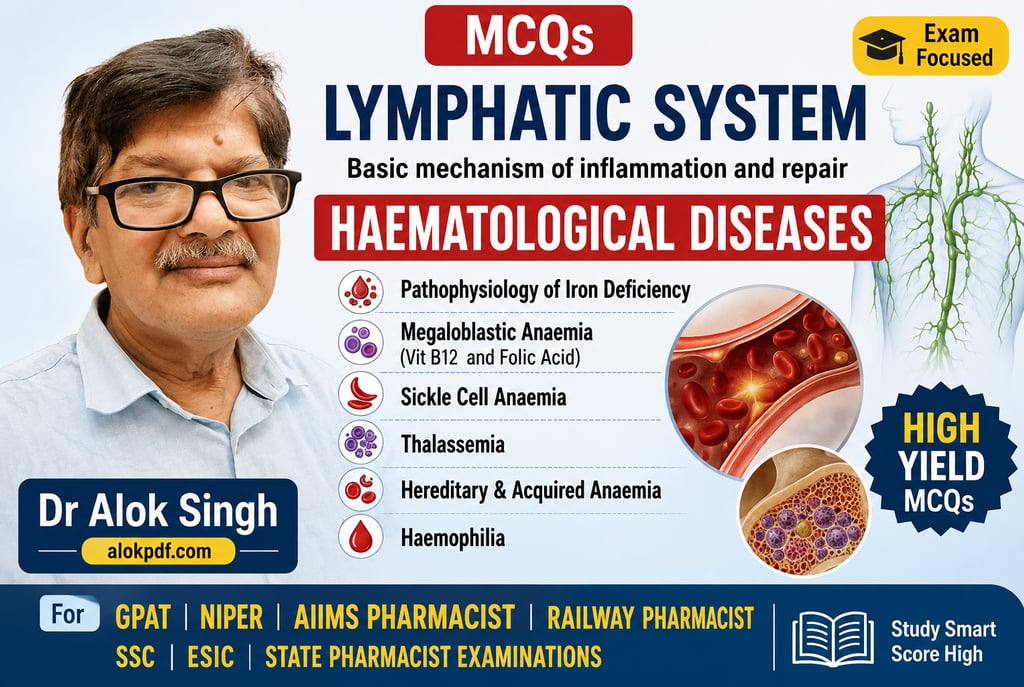
Practice MCQs on the Lymphatic System MCQs, inflammation, mediators of inflammation, iron deficiency anemia, megaloblastic anemia, sickle cell anemia, thalassemia, hereditary and acquired anemia, and hemophilia. Designed for GPAT, NIPER, AIIMS Pharmacist, Railway Pharmacist, SSC, ESIC.
Dr. Alok Singh
6/22/20264 min read
MCQs on Lymphatic System, Inflammation & Haematological Diseases
(GPAT, NIPER, AIIMS Pharmacist, Railway Pharmacist, SSC, ESIC & State Pharmacist Exams)
1. Which lymphatic organ is responsible for T-lymphocyte maturation?
A. Spleen
B. Bone marrow
C. Thymus
D. Lymph node
Answer: C. Thymus
Explanation: T-cells mature in the thymus, whereas B-cells mature in bone marrow.
2. Which of the following lymphatic organs filters blood rather than lymph?
A. Lymph node
B. Tonsil
C. Spleen
D. Peyer's patches
Answer: C. Spleen
3. Chyle is absorbed from the intestine mainly through
A. Sinusoids
B. Lacteals
C. Venules
D. Arterioles
Answer: B. Lacteals
4. The thoracic duct drains lymph from
A. Right upper quadrant only
B. Entire body except right upper quadrant
C. Head and neck only
D. Lower limbs only
Answer: B. Entire body except right upper quadrant
5. The right lymphatic duct drains lymph from
A. Both lower limbs
B. Entire body
C. Right upper limb, right thorax, and right side of head and neck
D. Abdomen
Answer: C. Right upper limb, right thorax, and right side of head and neck
6. Lymph differs from plasma mainly because it contains
A. More proteins
B. More RBCs
C. Less protein
D. More platelets
Answer: C. Less protein
7. Which force primarily favors lymph formation?
A. Plasma oncotic pressure
B. Interstitial oncotic pressure
C. Capillary hydrostatic pressure
D. Lymphatic pressure
Answer: C. Capillary hydrostatic pressure
8. Obstruction of lymphatic vessels commonly results in
A. Anemia
B. Edema
C. Polycythemia
D. Leukopenia
Answer: B. Edema
9. Which of the following is NOT a function of the lymphatic system?
A. Fat absorption
B. Immune defense
C. Maintenance of fluid balance
D. Hemoglobin synthesis
Answer: D. Hemoglobin synthesis
10. The largest lymphatic organ in the body is
A. Thymus
B. Spleen
C. Appendix
D. Tonsil
Answer: B. Spleen
11. Cardinal signs of inflammation were originally described as all EXCEPT
A. Rubor
B. Tumor
C. Calor
D. Cyanosis
Answer: D. Cyanosis
12. Which mediator is primarily responsible for vasodilation during acute inflammation?
A. Histamine
B. Thromboxane A2
C. Endothelin
D. Fibrinogen
Answer: A. Histamine
13. Histamine is mainly released from
A. Neutrophils
B. Mast cells
C. RBCs
D. Fibroblasts
Answer: B. Mast cells
14. The first leukocytes to arrive at the site of acute inflammation are
A. Eosinophils
B. Monocytes
C. Neutrophils
D. Basophils
Answer: C. Neutrophils
15. Which inflammatory mediator is derived from arachidonic acid through cyclooxygenase (COX)?
A. Histamine
B. Bradykinin
C. Prostaglandins
D. Complement C3a
Answer: C. Prostaglandins
16. Bradykinin is mainly responsible for
A. Fever
B. Pain
C. Clotting
D. Chemotaxis
Answer: B. Pain
17. Which cytokine is chiefly responsible for fever during inflammation?
A. IL-1
B. IL-10
C. IL-4
D. IL-5
Answer: A. IL-1
18. Margination refers to
A. RBC destruction
B. Movement of leukocytes to vessel periphery
C. Platelet aggregation
D. Clot dissolution
Answer: B. Movement of leukocytes to vessel periphery
19. Which complement component acts as a potent chemotactic factor?
A. C1
B. C2
C. C3a
D. C5a
Answer: D. C5a
20. Granulation tissue is characterized by
A. Necrosis and calcification
B. Fibroblast proliferation and angiogenesis
C. Hemorrhage only
D. RBC accumulation
Answer: B. Fibroblast proliferation and angiogenesis
21. Healing by primary intention occurs in
A. Large infected wounds
B. Surgical incisions with clean edges
C. Burn injuries
D. Pressure ulcers
Answer: B. Surgical incisions with clean edges
22. Which mediator increases vascular permeability most rapidly?
A. Histamine
B. TNF-α
C. IL-2
D. Interferon
Answer: A. Histamine
23. Which leukocyte predominates in chronic inflammation?
A. Neutrophil
B. Monocyte/Macrophage
C. Basophil
D. Platelet
Answer: B. Monocyte/Macrophage
Iron Deficiency Anaemia
24. Iron deficiency anemia is typically
A. Macrocytic hypochromic
B. Normocytic normochromic
C. Microcytic hypochromic
D. Megaloblastic
Answer: C. Microcytic hypochromic
25. Which laboratory finding is most characteristic of iron deficiency anemia?
A. Increased serum ferritin
B. Increased serum iron
C. Decreased ferritin
D. Increased vitamin B12
Answer: C. Decreased ferritin
26. Pica is commonly associated with
A. Hemophilia
B. Iron deficiency anemia
C. Thalassemia major
D. Polycythemia
Answer: B. Iron deficiency anemia
27. Megaloblastic anemia results from defective
A. Protein synthesis
B. DNA synthesis
C. Fat metabolism
D. Iron absorption
Answer: B. DNA synthesis
28. Vitamin B12 deficiency commonly causes
A. Peripheral neuropathy
B. Hemarthrosis
C. Splenic rupture
D. Polycythemia
Answer: A. Peripheral neuropathy
29. Which deficiency produces megaloblastic anemia without neurological manifestations?
A. Iron deficiency
B. Folic acid deficiency
C. Copper deficiency
D. Vitamin K deficiency
Answer: B. Folic acid deficiency
30. Hypersegmented neutrophils are characteristic of
A. Hemolytic anemia
B. Iron deficiency anemia
C. Megaloblastic anemia
D. Aplastic anemia
Answer: C. Megaloblastic anemia
Sickle Cell Anaemia
31. Sickle cell anemia results from substitution of
A. Lysine for glutamic acid
B. Valine for glutamic acid
C. Histidine for valine
D. Glycine for alanine
Answer: B. Valine for glutamic acid
32. The abnormal hemoglobin in sickle cell disease is
A. HbA
B. HbA2
C. HbF
D. HbS
Answer: D. HbS
33. Sickling is enhanced by
A. High oxygen tension
B. Alkalosis
C. Hypoxia
D. Hyperoxia
Answer: C. Hypoxia
34. Repeated sickling episodes primarily cause
A. Increased clotting factor synthesis
B. Vaso-occlusion
C. Polycythemia
D. Megaloblastosis
Answer: B. Vaso-occlusion
Thalassemia
35. Thalassemia is characterized by
A. Defective globin chain synthesis
B. Defective iron absorption
C. Vitamin B12 deficiency
D. Platelet dysfunction
Answer: A. Defective globin chain synthesis
36. β-thalassemia major typically presents in
A. Newborn period
B. After 6 months of age
C. Adolescence
D. Old age
Answer: B. After 6 months of age
37. "Crew-cut" appearance on skull X-ray is associated with
A. Hemophilia
B. Iron deficiency anemia
C. β-Thalassemia major
D. Aplastic anemia
Answer: C. β-Thalassemia major
38. Which hemoglobin level is increased in β-thalassemia major?
A. HbA
B. HbF
C. HbA2 only
D. HbH
Answer: B. HbF
Hereditary and Acquired Anaemias
39. Which is a hereditary hemolytic anemia?
A. Iron deficiency anemia
B. Sickle cell anemia
C. Anemia of chronic disease
D. Megaloblastic anemia
Answer: B. Sickle cell anemia
40. Aplastic anemia is characterized by
A. Pancytopenia
B. Polycythemia
C. Leukocytosis
D. Thrombocytosis
Answer: A. Pancytopenia
41. The most common acquired cause of anemia worldwide is
A. Vitamin B12 deficiency
B. Iron deficiency
C. Hemophilia
D. Thalassemia
Answer: B. Iron deficiency
Hemophilia
42. Hemophilia A results from deficiency of
A. Factor VIII
B. Factor IX
C. Factor VII
D. Factor X
Answer: A. Factor VIII
43. Hemophilia B is due to deficiency of
A. Factor VIII
B. Factor IX
C. Factor XI
D. Factor XII
Answer: B. Factor IX
44. Hemophilia is inherited as
A. Autosomal dominant
B. Autosomal recessive
C. X-linked dominant
D. X-linked recessive
Answer: D. X-linked recessive
45. A characteristic clinical feature of hemophilia is
A. Petechiae
B. Hemarthrosis
C. Jaundice
D. Cyanosis
Answer: B. Hemarthrosis
46. Which coagulation test is prolonged in hemophilia?
A. Bleeding time only
B. Prothrombin time (PT)
C. Activated partial thromboplastin time (aPTT)
D. Clot retraction
Answer: C. Activated partial thromboplastin time (aPTT)
47. The most potent endogenous pyrogen among the following is
A. IL-1
B. Histamine
C. Bradykinin
D. Fibrinogen
Answer: A. IL-1
48. Which inflammatory mediator is synthesized rather than preformed?
A. Histamine
B. Serotonin
C. Prostaglandins
D. Heparin
Answer: C. Prostaglandins
49. Which condition is associated with defective lymphatic drainage leading to elephantiasis?
A. Malaria
B. Filariasis
C. Tuberculosis
D. Leprosy
Answer: B. Filariasis
50. A patient with megaloblastic anemia has neurological symptoms. The most likely deficiency is
A. Iron
B. Folic acid
C. Vitamin B12
D. Vitamin K
Answer: C. Vitamin B12
Exam Booster
Topic Fact
T-cell maturation Thymus
B-cell maturation Bone marrow
Blood filter Spleen
Lymph fat absorption Lacteals
Vasodilation Histamine
Pain mediator Bradykinin
Fever mediator IL-1, TNF-α
Chemotaxis C5a
Iron deficiency anemia Microcytic hypochromic
Megaloblastic anemia Hypersegmented neutrophils
Sickle cell mutation Valine replaces glutamic acid
β-Thalassemia Reduced β-globin synthesis
Hemophilia A Factor VIII deficiency
Hemophilia B Factor IX deficiency
Hemophilia test ↑ aPTT, normal PT