
Peripheral Nervous System MCQs
Master the Peripheral Nervous System MCQs covering the classification, structure, and functions of the sympathetic and parasympathetic nervous systems, as well as the origin and functions of spinal and cranial nerves. Ideal for GPAT, NIPER, AIIMS Pharmacist, Railway Pharmacist, SSC,
Dr. Alok Singh
6/22/20264 min read
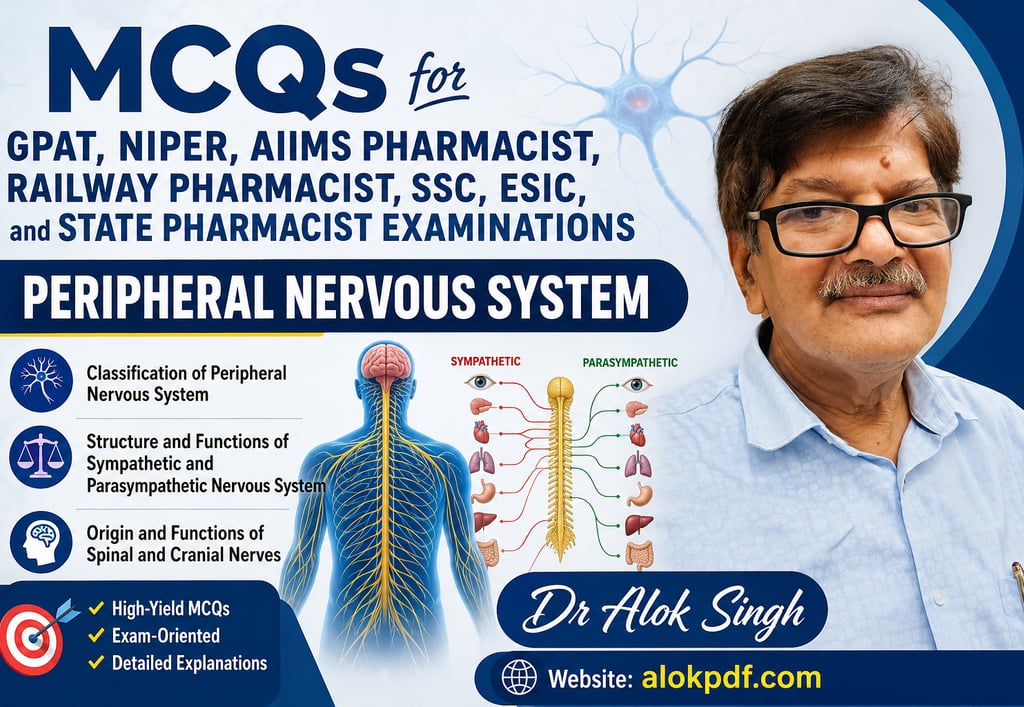
MCQs on Peripheral Nervous System (PNS), GPAT, NIPER, AIIMS Pharmacist, Railway Pharmacist, SSC, ESIC, and State Pharmacist Examinations
1. The peripheral nervous system (PNS) consists of
A. Brain and spinal cord only
B. Cranial nerves, spinal nerves, and ganglia outside the CNS
C. Brain, spinal cord, and meninges
D. Cerebellum and spinal cord
Answer: B
Explanation: The PNS includes all neural structures outside the central nervous system, namely cranial nerves, spinal nerves, and peripheral ganglia.
2. The autonomic nervous system is functionally divided into
A. Sensory and motor divisions
B. Somatic and visceral divisions
C. Sympathetic and parasympathetic divisions
D. Cranial and spinal divisions
Answer: C
Explanation: The autonomic nervous system (ANS) consists of sympathetic and parasympathetic divisions regulating involuntary activities.
3. The sympathetic nervous system is also known as
A. Craniosacral outflow
B. Thoracolumbar outflow
C. Bulbosacral outflow
D. Cervicolumbar outflow
Answer: B
Explanation: Sympathetic fibers arise from the T1–L2 segments of the spinal cord, hence they are called the thoracolumbar outflow.
4. Preganglionic neurons of the sympathetic nervous system originate from
A. Brainstem only
B. Sacral spinal cord
C. Thoracic and upper lumbar spinal cord
D. Cervical spinal cord
Answer: C
Explanation: Sympathetic preganglionic neurons arise from the lateral horns of T1–L2 spinal segments.
5. The parasympathetic nervous system is commonly referred to as
A. Thoracolumbar system
B. Fight-or-flight system
C. Craniosacral system
D. Somatic system
Answer: C
Explanation: Parasympathetic fibers arise from certain cranial nerves and sacral spinal cord segments (S2–S4).
6. Which cranial nerve does NOT carry parasympathetic fibers?
A. Oculomotor (III)
B. Facial (VII)
C. Vestibulocochlear (VIII)
D. Vagus (X)
Answer: C
Explanation: Cranial nerve VIII is purely sensory and does not carry parasympathetic fibers.
7. In the sympathetic nervous system, postganglionic fibers are generally
A. Short
B. Long
C. Absent
D. Equal in length to preganglionic fibers
Answer: B
Explanation: Sympathetic ganglia lie near the spinal cord; therefore, postganglionic fibers are long.
8. Parasympathetic ganglia are located
A. Near the spinal cord
B. In sympathetic chain
C. Within or near target organs
D. In dorsal root ganglia
Answer: C
Explanation: Parasympathetic ganglia are located close to or within effector organs.
9. The neurotransmitter released by all autonomic preganglionic neurons is
A. Dopamine
B. Norepinephrine
C. Acetylcholine
D. Serotonin
Answer: C
Explanation: Both sympathetic and parasympathetic preganglionic neurons release acetylcholine.
10. Which neurotransmitter is primarily released by most sympathetic postganglionic neurons?
A. Acetylcholine
B. Norepinephrine
C. Dopamine
D. GABA
Answer: B
Explanation: Most sympathetic postganglionic neurons release norepinephrine, except those supplying sweat glands.
11. Sympathetic stimulation generally causes
A. Decreased heart rate
B. Pupil constriction
C. Increased heart rate and blood pressure
D. Increased gastrointestinal motility
Answer: C
Explanation: Sympathetic activity prepares the body for emergencies ("fight-or-flight").
12. Parasympathetic stimulation typically produces
A. Bronchodilation
B. Increased heart rate
C. Increased gastrointestinal secretion and motility
D. Pupil dilation
Answer: C
Explanation: Parasympathetic activity promotes digestion and energy conservation.
13. Which response is characteristic of sympathetic activation?
A. Salivation increases
B. Pupil constriction
C. Glycogen breakdown increases
D. Urinary bladder contraction
Answer: C
Explanation: Sympathetic stimulation mobilizes energy reserves through glycogenolysis.
14. The total number of pairs of spinal nerves in humans is
A. 12
B. 24
C. 31
D. 33
Answer: C
Explanation: There are 31 pairs of spinal nerves: 8 cervical, 12 thoracic, 5 lumbar, 5 sacral, and 1 coccygeal.
15. How many pairs of cranial nerves arise from the brain?
A. 10
B. 11
C. 12
D. 31
Answer: C
Explanation: Humans possess 12 pairs of cranial nerves.
16. A typical spinal nerve is formed by the union of
A. Dorsal and ventral roots
B. Gray and white rami
C. Sympathetic trunks
D. Cranial and spinal fibers
Answer: A
Explanation: The dorsal sensory root and ventral motor root combine to form a mixed spinal nerve.
17. The dorsal root ganglion contains
A. Motor neuron cell bodies
B. Interneurons
C. Sensory neuron cell bodies
D. Sympathetic neurons
Answer: C
Explanation: Cell bodies of sensory neurons are located in dorsal root ganglia.
18. Which cranial nerve is entirely sensory?
A. Trigeminal (V)
B. Vestibulocochlear (VIII)
C. Facial (VII)
D. Vagus (X)
Answer: B
Explanation: Cranial nerve VIII carries auditory and vestibular sensations only.
19. The vagus nerve (X) provides parasympathetic innervation to
A. Lower limbs only
B. Thoracic and abdominal viscera
C. Eye muscles only
D. Skin glands
Answer: B
Explanation: The vagus nerve supplies parasympathetic fibers to the heart, lungs, and much of the digestive tract.
20. Which cranial nerve is primarily responsible for smell?
A. Optic (II)
B. Olfactory (I)
C. Facial (VII)
D. Glossopharyngeal (IX)
Answer: B
Explanation: The olfactory nerve transmits sensory impulses related to smell.
21. Which cranial nerve controls most extraocular muscles?
A. Trochlear (IV)
B. Trigeminal (V)
C. Oculomotor (III)
D. Abducens (VI)
Answer: C
Explanation: The oculomotor nerve innervates most muscles responsible for eye movements.
22. A patient exhibits increased heart rate, dilated pupils, and bronchodilation. Which division is dominant?
A. Parasympathetic
B. Somatic
C. Sympathetic
D. Sensory
Answer: C
Explanation: These are classic effects of sympathetic activation.
23. Which statement correctly compares sympathetic and parasympathetic systems?
A. Both originate from the thoracic spinal cord only
B. Sympathetic ganglia are near target organs
C. Parasympathetic preganglionic fibers are generally longer
D. Both divisions release norepinephrine at effector organs
Answer: C
Explanation: Parasympathetic ganglia lie close to organs, resulting in long preganglionic fibers.
24. The cranial nerve responsible for the facial expression muscles is
A. Trigeminal (V)
B. Facial (VII)
C. Accessory (XI)
D. Hypoglossal (XII)
Answer: B
Explanation: The facial nerve innervates muscles of facial expression.
25. Which cranial nerve innervates the tongue muscles?
A. Vagus (X)
B. Facial (VII)
C. Hypoglossal (XII)
D. Trigeminal (V)
Answer: C
Explanation: The hypoglossal nerve controls movements of the tongue.
26. Sweat glands are an important exception because sympathetic postganglionic fibers release
A. Norepinephrine
B. Acetylcholine
C. Dopamine
D. Histamine
Answer: B
Explanation: Sympathetic fibers to sweat glands are cholinergic and release acetylcholine.
27. Which spinal nerve region contains the greatest number of nerve pairs?
A. Lumbar
B. Sacral
C. Thoracic
D. Cervical
Answer: C
Explanation: The thoracic region contains 12 pairs, the largest among spinal nerve groups.
28. The "rest-and-digest" functions are primarily mediated by
A. Somatic nervous system
B. Sympathetic nervous system
C. Parasympathetic nervous system
D. Enteric nervous system alone
Answer: C
Explanation: Parasympathetic activity conserves energy and promotes digestion.
29. Damage to the dorsal root of a spinal nerve would primarily affect
A. Motor function
B. Sensory transmission
C. Parasympathetic activity only
D. Sympathetic activity only
Answer: B
Explanation: Dorsal roots carry sensory impulses toward the CNS.
30. Which pair is correctly matched?
A. Sympathetic – Craniosacral origin
B. Parasympathetic – Thoracolumbar origin
C. Sympathetic – Fight-or-flight response
D. Parasympathetic – Increased heart rate
Answer: C
Explanation: The sympathetic nervous system mediates the fight-or-flight response, whereas parasympathetic activity promotes rest-and-digest functions.
Exam Points
Sympathetic = Thoracolumbar (T1–L2) = Fight or Flight
Parasympathetic = Craniosacral = Rest and Digest
31 pairs of spinal nerves
12 pairs of cranial nerves
All autonomic preganglionic neurons release acetylcholine.
Most sympathetic postganglionic neurons release norepinephrine.
Exception: Sweat glands receive sympathetic cholinergic fibers (acetylcholine).
Dorsal root = Sensory; Ventral root = Motor
Vagus nerve (X) provides the majority of parasympathetic outflow to thoracic and abdominal organs.
Dr Alok Singh