
Why Newborns Cry at Birth but Don’t Laugh for Weeks
Why do babies cry the moment they’re born but take weeks—or even months—to smile or laugh? This blog post explores the fascinating science behind a newborn’s first cry and the delayed arrival of their first real emotions. From how crying helps activate the lungs and nervous system to why smiling and laughter require brain development, discover what’s really happening inside a baby’s body during those first moments of life. A curiosity-driven, science-backed look at how humans transition from the womb to the world.
Dr Pramila Singh
1/3/20263 min read


Why Newborns Cry at Birth but Don’t Laugh for Weeks: The Hidden Biology of Their First Emotions
The moment a baby is born, the delivery room fills with a sound we all recognize instantly—a cry. It happens so reliably that we rarely question it. Why does a newborn almost always cry within seconds of birth? Why isn’t a baby ever born quiet, smiling, or laughing?
That very first cry is not accidental or emotional. It is one of the most remarkable biological transitions in human life—a carefully programmed response that marks the beginning of survival outside the womb.
Is Crying at Birth Essential?
Not always—but it is deeply meaningful.
A newborn’s cry is a sign that the body’s life-support systems are coming online. Many people assume babies cry because birth is painful, but scientific evidence suggests otherwise. Newborns lack the neurological maturity to experience pain in the way adults do. Instead, the cry serves a physiological purpose.
For nine months, the baby lives in a protected, fluid-filled environment. The lungs are inactive and filled with liquid, and oxygen is supplied through the placenta. Birth abruptly ends this support system. As the baby enters the outside world, air floods the lungs, forcing out fluid and opening millions of tiny air sacs called alveoli. Crying helps clear the lungs and allows oxygen to circulate—making it the baby’s first independent act of life.

A Sudden Sensory Overload
The womb is warm, dark, quiet, and constant. Outside the womb, everything is unfamiliar. The temperature drops instantly, bright lights replace darkness, loud sounds replace muffled silence, and gravity makes its presence known for the first time.
This dramatic shift activates the newborn’s nervous system. Crying is the brain’s automatic response to this sensory shock—a survival reflex that signals alertness and adaptation to the new environment.
Why Medical Teams Listen for That First Cry
To doctors, a baby’s cry is reassuring evidence of health.
Right after birth, healthcare professionals assess newborns using the Apgar score, which evaluates breathing, heart rate, muscle tone, reflexes, and skin color. A strong cry indicates effective breathing and healthy oxygenation. If a baby doesn’t cry immediately, gentle stimulation—such as rubbing the back or tapping the feet—is often enough to trigger breathing.
Can a Baby Be Born Without Crying?
Yes, and it can still be normal.
Some babies take a calm first breath and remain quiet. Others cry briefly and then settle. As long as the baby is breathing well, has good muscle tone, and shows healthy skin color, silence alone is not a cause for concern. Medical literature documents such peaceful births.
However, if a baby does not cry and does not breathe, immediate medical intervention is essential.


Why Babies Aren’t Born Smiling
Despite popular myths, there is no scientific evidence of babies smiling at birth.
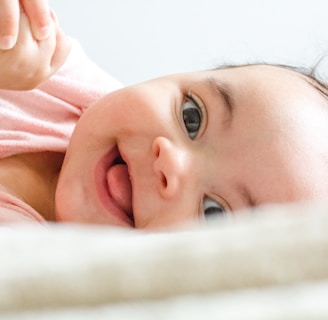
True smiling requires advanced coordination between the brain, facial muscles, and emotional centers—systems that develop gradually after birth. Newborns may display brief facial movements that resemble smiles, but these are reflex actions, not expressions of joy. Social smiling typically begins around 6 to 8 weeks, once brain circuits responsible for emotion and recognition mature.
Why Laughing Takes Even Longer
Laughter is even more complex than smiling. It involves emotional awareness, breath control, and social interaction—abilities that take months to develop. Most babies laugh for the first time between 3 and 4 months, when their brains are better equipped to process pleasure and connection.
The First Cry: A Biological Announcement
A newborn’s cry is not a sign of distress—it is a declaration of life. It marks the moment the baby transitions from total dependence on the womb to independent breathing and survival. That sound signals that the heart, lungs, brain, and nervous system are synchronizing for life outside the uterus.
In many ways, the first cry is the body’s way of saying:
“I have arrived—and I am learning to live.”